
Alejandra.
Working to send Bob to Congress.
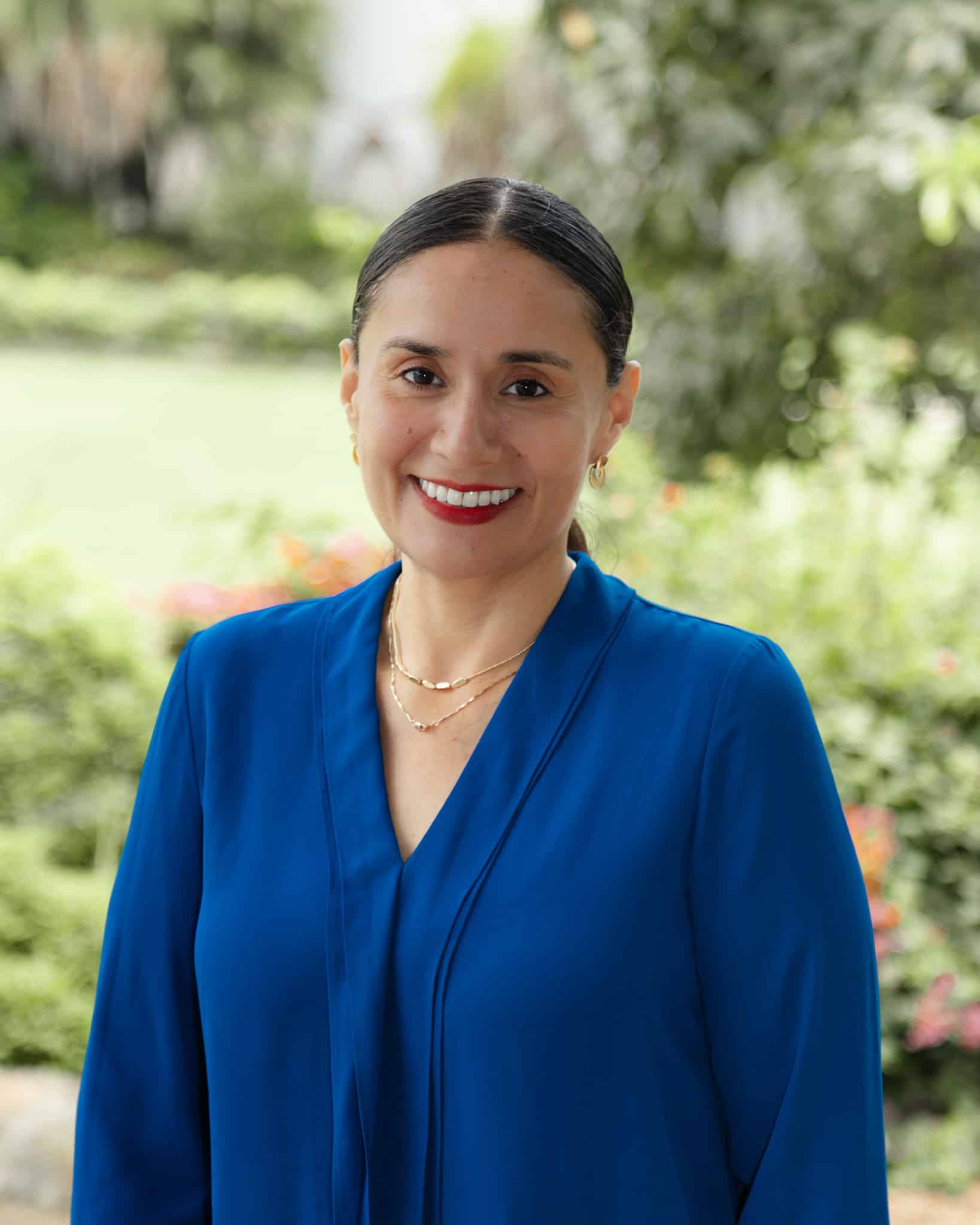
Alejandra Gutierrez was elected to the Santa Barbara City Council in 2019 and represented District 1 until January 2025. She now leads Latino outreach for Bob Smith. This is how she got here.
Bob shows up.
Bob listens.
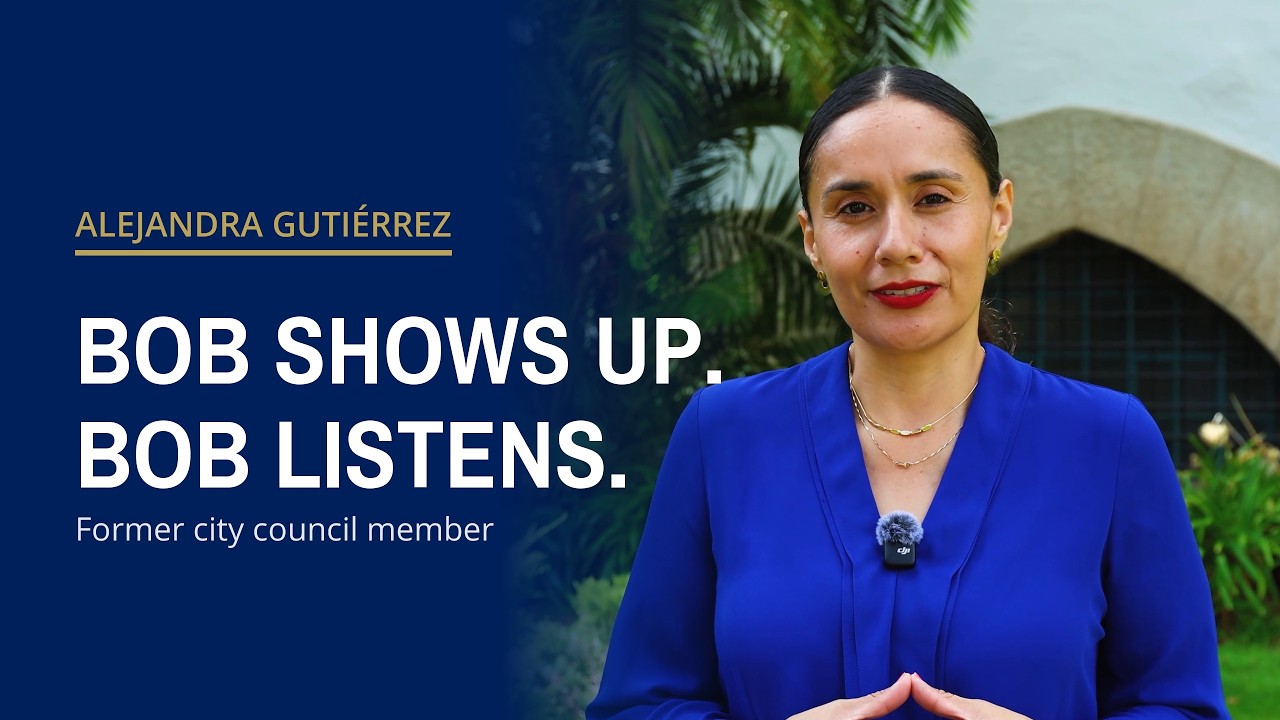
Alejandra Gutierrez represented District 1 on the Santa Barbara City Council from 2019 to January 2025. Here is why she is backing Bob: fair immigration reform, a path to citizenship for DACA students, and no more false promises.
Bob agrees, and has drafted legislation to bring with him on day one that gives Dreamers a defined legal pathway forward.
“We need to stop the division. We need to come together and get behind people that have the experience and the proven results to lead.”
She did not come up through a party. She came up through a neighborhood.
Alejandra Gutierrez was elected to represent District 1 on the Santa Barbara City Council in 2019, and served until January 2025.
District 1 is not the Santa Barbara on the postcards. It is the working side of town. It is the families who clean the hotel rooms, cook in the restaurants, pick in the fields north of the city, and drive an hour each way because they cannot afford to live where they work. It is where she is from.
On the council she was frequently the vote nobody could count on in advance. She does not describe that as courage. She describes it as the job. Her test on any item was whether the decision was fair, whether it was just, and whether it spent the public’s money responsibly.
That test does not care which side of the room a proposal comes from. Applied honestly, it eventually puts you at odds with everyone.
It did.
“I never set out to be a politician.”
“I stepped into public service to do what I believed was right for my community.”
“That independence came at a cost.”
“There is also a growing gap between what is discussed publicly and what is achieved.”
Alejandra Gutierrez, “When Leadership Forgets Who It Serves,” Santa Barbara Independent, 30 March 2026. Also published in Noozhawk.
What she actually did
Not a list of positions. A list of votes and proposals, and one of them is the reason she is doing this now.
Tenant protections
She voted for protections against no-fault evictions, a right of first refusal for tenants, and safeguards against landlord harassment. She backed funding for Legal Aid so a renter facing eviction has someone in the room who knows the law.
Housing for working families
She proposed an initiative to expand housing opportunity for working families, reduce displacement, keep long-term residents in the city, and bring additional revenue in while doing it. It did not move forward.
Streetlights on Milpas
Unglamorous, and the kind of thing that decides whether a neighborhood feels safe walking home. She fought to get Milpas lighting into the city budget and kept it there.
The taxpayer test
Her stated standard on every fiscal item: was this fair, was justice served, and was public money used responsibly. She applied it to proposals from her own side, which is where the trouble started.
Emergency preparedness
A coastal district that has lived through fire, debris flow and evacuation. She worked on preparedness and on public safety as a practical service the city owes people, not as a slogan.
Showing up
Constituent outreach in a district where a lot of people had never been asked anything by anyone at City Hall, and where a lot of the asking has to happen in Spanish.
Her council record is summarised here from her own published account and from the public record of her time in office.
One vote explains the whole thing
She brought forward a housing initiative aimed at working families. More supply. Less displacement. Long-term residents able to stay. More revenue for the city, not less.
It was the kind of proposal that every speech in that building had been calling for.
It did not move forward.
She has been careful about why. Her own account is that consensus is hard, that the politics were difficult, and that there needed to be more room for open dialogue than there was. She has not gone looking for a villain.
But the families the proposal was written for did not get a policy. They got a discussion. That is the gap, and once you have watched it open on something you worked on yourself, you stop being able to unsee it anywhere else.
The support moved. The standard did not.
She had the backing of the Democratic Party. Then she declined to endorse where she was expected to endorse, and declined to line up behind positions she did not agree with.
The backing went elsewhere.
She has written that the experience was difficult. She has also written that it confirmed what she already believed, which is that public service should run on independent judgment rather than on political alignment.
Read that carefully, because it is the load-bearing sentence. She is not describing a grievance. She is describing a standard she was willing to lose something over. Anyone can hold a standard that costs nothing.
Same question. Different chair.
Start with the fair version, because it is the true one. The people who built this county’s leadership were trying to solve real things. Housing that a family on a normal wage can afford. Wages that keep up with what a week costs. Streets that are safe. Schools that lead somewhere. Those are the right problems. Anyone who says otherwise is not paying attention.
The problems are still here.
That is not a reason to give up on the goal. It is a reason to change the method. Keep every one of those aims and put someone in the chair who measures the work by what it produced rather than by what was said about it.
Which is the argument Bob Smith has been making since the day he filed. He is a systems engineer. He spent twenty six years in the Navy, where a plan that sounds excellent and does not work is simply a plan that does not work. Rhetoric on one side. Results on the other. Judge it by the results.
Alejandra Gutierrez spent five years applying exactly that test from a council seat, with the Democratic Party’s support on the line, and paid for it. Bob Smith was running as a Republican, and has since changed his registration to No Party Preference. She weighed that, and decided it was the smaller question.
This is not a party problem.
It is a results problem.
She is not asking anyone to change who they are. She has not changed who she is. She is asking people to apply the same test she applied, and to be honest about the answer.
Four things she fought for. Four things he is running on.
The American Dream should be attainable again
Expand housing supply and first-time homeownership. Lower energy and grocery costs for working families. Audit and cut the wasteful federal spending that feeds inflation. Protect Social Security and Medicare for the people who paid in.
Her council housing initiative was aimed at the same family. Same goal. This time with someone who counts what it delivered.
Real careers and real opportunity
Fundamentals first: reading, math and STEM. Fund vocational and trade pathways, not only four-year degrees. Partner with UCSB and Cal Poly on applied research. Transparency and parental involvement in local schools.
In her district, a trade pathway is not a policy abstraction. It is whether a kid can afford to stay in the town he grew up in.
Reliable. Affordable. Clean. Secure.
Reliable baseload power alongside clean generation. Protect the coastline and our fisheries. Invest in storage, recycling and drought resilience. Support Central Coast agriculture with dependable water.
A power bill is an affordability issue before it is an environmental one, and it lands hardest on the households she represented.
Compassion with order. Lawfulness with opportunity.
Secure the border and stop the flow of fentanyl. Remove violent offenders without apology. Legal clarity for long-term residents who work here and pay taxes here. Modernize agricultural and seasonal visa programs.
Both halves, held at once. That is the position, and it is why she is willing to knock on a door and defend it.
Alejandra Gutierrez is the campaign’s designated authority on Latino outreach. Where this campaign’s Spanish-language work and Latino messaging are concerned, her judgment governs.
What Latino outreach actually means here
Not a mailer with a stock photo on it. People from these communities, talking to their own neighbors, in the language the conversation should happen in.
Teams, not vendors
She has built outreach teams out of people who already live in these neighborhoods. A familiar face at the door outperforms a paid stranger every time, and it does not disappear on 4 November.
Doors
Her teams are knocking in Latino communities across the district. Not a list-rental, not a robocall. A conversation on a doorstep, which is still the only contact anyone actually remembers.
In Spanish, properly
Translated English is obvious to anyone who speaks the language, and it reads as an afterthought because it is one. Spanish-language material on this campaign goes through her.
Listening first
The opening question is what is making this year hard, not who are you voting for. Most of the answers come back the same: rent, groceries, gas, the power bill, and whether the kids can afford to stay.
Immigration, straight
She does not soften the position and she does not skip past it. Order and compassion together, said plainly, to people for whom it is not theoretical.
No one is written off
Whatever is on the registration, or nothing at all. The pitch does not change by party, because the test she is asking people to apply does not change either.
Join her
Outreach teams are going out across the district every week. Pick one way to help today and we will take it from there.
Election day is days away. November 3, 2026.